iPhone · Match-3
Crystal Depths
A match-3 mine with no lives, no ads and no difficulty quietly tuned to sell you a way out.
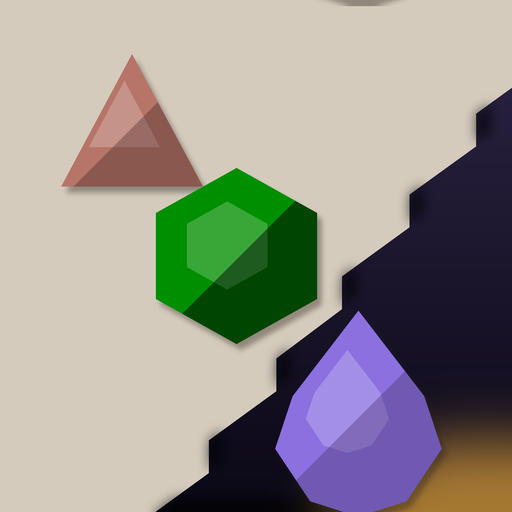
Twenty hand-built layers take you down a shaft that changes colour as you descend, past six crystals you can tell apart by shape before you ever get to colour. The genre's worst habits are not balanced here — they are simply absent.
- Games · Puzzle
- Rated 4+
- 20 layers
- 8 languages
- Plays offline
Crystal Depths is a match-3 puzzle game for iPhone about digging. It answers the genre's loudest complaints by removing them: no energy meter, no interstitial ads, no rigged difficulty, and a top grade that money cannot reach at any price.
The rules the game has to keep.
A fair-play promise is easy to print and easy to quietly break. Here the economy, the star grading and the accessibility palette all live in a pure-Swift engine with its own test suite — so a purchase that could buy a third star fails the build instead of shipping.
-
No lives, no energy, no ads
Nothing to wait for and nothing to sit through. There is no ad SDK in the project at all, and losing costs you nothing.
-
Undo is free and unlimited
Including the move that ended the run — the undo button is still live on the loss card. A dead board reshuffles itself, also free.
-
The third star cannot be bought
Boosters help you clear a layer but cap the run at two stars. Money reaches coins and cosmetics, and nothing else.
-
Open rock
The rock above each column shows what is about to drop into it. The preview is the same queue the engine pops from, so it cannot lie.
-
Every restart is a fresh deal
The seed is a function of the layer and the attempt number, so a layer that felt impossible genuinely becomes a different puzzle.
-
The loss screen sells nothing
No "five more moves" at a rising price at the exact moment you are most likely to pay. That offer does not exist in the game.
Twenty layers. Four zones. It gets darker.
The map is a cross-section of the shaft, labelled in metres, with side shafts hanging off the column that open on your total stars.
-
Surface amethyst
−10 m … −50 m
Violet rock near daylight. Layers 1–5 teach the move, the specials and the grade.
-
Malachite galleries
−60 m … −100 m
Green stone and the first blockers — stone that cracks, then stone that needs two hits.
-
Abyssal blue
−110 m … −150 m
Rubble that falls with the crystals but can never be matched, and chasms that swallow what sits over them.
-
Ember core
−160 m … −200 m
Warm rock at the bottom of the mine. Layer 20 combines chasm and rubble with no pre-start picks at all.
Six crystals. Six silhouettes.
Colour is always the second channel, never the first — which is what makes the board readable for the roughly one in twelve men who sees colour differently. Three palettes recolour the crystals themselves rather than washing a filter over the screen, and both the palette separation and the outline distinguishability are checked by automated tests rather than by eye.
- RubyTriangle
- EmeraldHexagon
- SapphireTeardrop
- TopazRounded square
- AmethystPentagon
- DiamondBrilliant cut
Things worth digging for.
-
Seeds that ripen
Leave a crystal unmatched and after five moves it matures into a druse worth double. The genre's only reward for deliberately not making a match.
-
Blockers with topology
An ore vein whose fracture runs one step along its own lattice each wave. Rubble that falls but never matches. A chasm showing the zone below through the hole.
-
One daily puzzle
Derived entirely from the date, so it is the same board for everyone with no backend. Retrying deals the same board — that is what makes it shared rather than a slot machine.
-
A streak that forgives
Missing a single day is forgiven, and the streak bonus caps at ten days, so a run never quietly turns into an obligation.
-
The journal
Not a lobby you pass through on the way to the game, but the place you come back to look at what you did. Progress, streak, chest track, achievements.
-
Hints that name the pattern
The first press tells you what to look for. Only the second shows you the exact cells — so a hint can still teach you something.
Every booster in the shop is printed beside the free way to get exactly the same thing. No timers, no struck-through prices, no discounts from a price that never existed.
No account. No backend. No analytics.
Crystal Depths requests no system permissions at all and makes no network requests of its own. The only server it ever talks to is Apple's App Store, and only to deliver in-app purchases.
- Nothing collected, from anyone
- No advertising and no tracking
- No crash reporting
- No third-party SDKs at all
- Progress stays in a local file
- Plays fully offline
How it is built.
Pure SwiftUI — no SpriteKit. The match-3 engine is a separate Swift package with zero UI dependencies, and it returns each move as an ordered list of resolution steps, so the interface animates the real phases of a move rather than diffing two board states.
Questions people actually ask.
Are there ads or an energy meter?
Neither. No energy to wait on, no lives to lose, and no advertising SDK in the project at all. Restarting is instant, free and unlimited, and every attempt deals a fresh board.
Can I finish it without paying?
Yes. Nothing on sale unlocks game content — every layer, crystal and feature is there from the start.
Money buys coins, coins buy boosters, and any booster caps that run at two stars. The third star is the one thing money cannot reach. Boosters also turn up in the free daily gift, and layers, the daily puzzle and star chests all pay coins.
I'm colour-blind. Is it actually playable?
Yes — that was a day-one requirement, not a later setting. Each of the six crystals has its own silhouette, so colour is never the only channel.
Settings offers palettes solved specifically for deuteranopia, protanopia and tritanopia that recolour the crystals themselves instead of laying a wash over the screen, plus optional letters on tiles. The palette separation is verified against a dichromat simulation in the test suite.
What happens when I lose a level?
Nothing is taken from you. Restart is instant and free, undo still works on the move that ended the run, a dead board reshuffles itself for free, and the loss screen sells you nothing.
Does it work offline?
Completely. No backend, no account, and no system permissions requested. Progress is a single local file on the device.
Does my progress sync between devices?
No — progress is stored only on the device, so deleting the app deletes it. Purchases are different: they are tied to your Apple Account and always come back with Restore Purchases.
Is it suitable for a child?
It is rated 4+. Nothing is collected from anyone, there is no chat, no user-generated content and no way to reach the open web from inside the app. Purchases go through the App Store, where Ask to Buy and Screen Time restrictions apply as usual. See the privacy policy.
Twenty layers down.
Nothing waiting to be paid for.
Coming to the App Store for iPhone.